


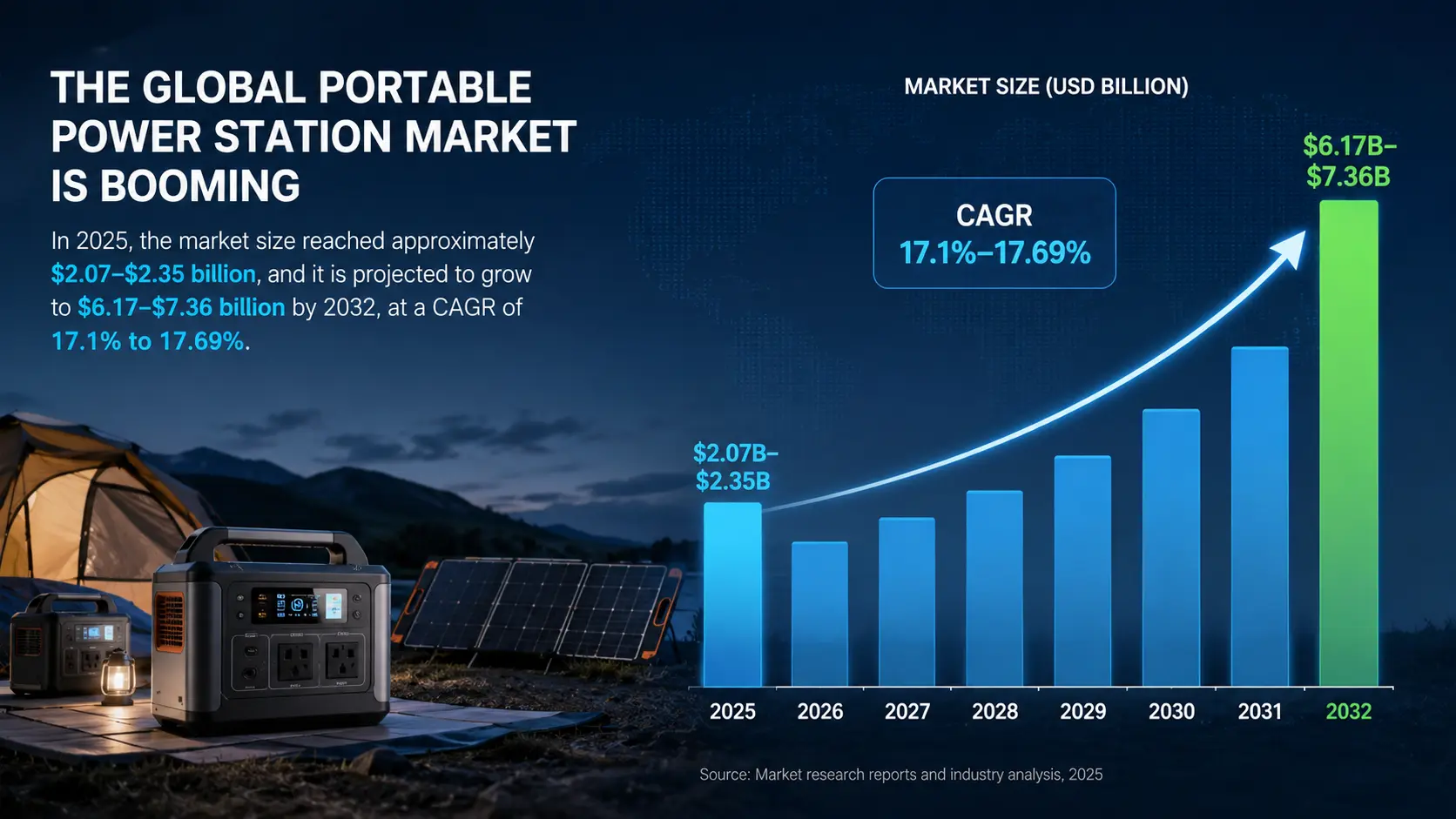
The global portable power station market is booming. In 2025, the market size reached approximately $2.07–$2.35 billion, and it is projected to grow to $6.17–$7.36 billion by 2032, at a CAGR of 17.1% to 17.69%.
If you are planning to enter this high‑growth segment and build your own brand of portable power stations, your first critical decision is: OEM or ODM?
This guide clarifies the differences, helps you evaluate which model fits your business stage, and shows you how to make the right choice.
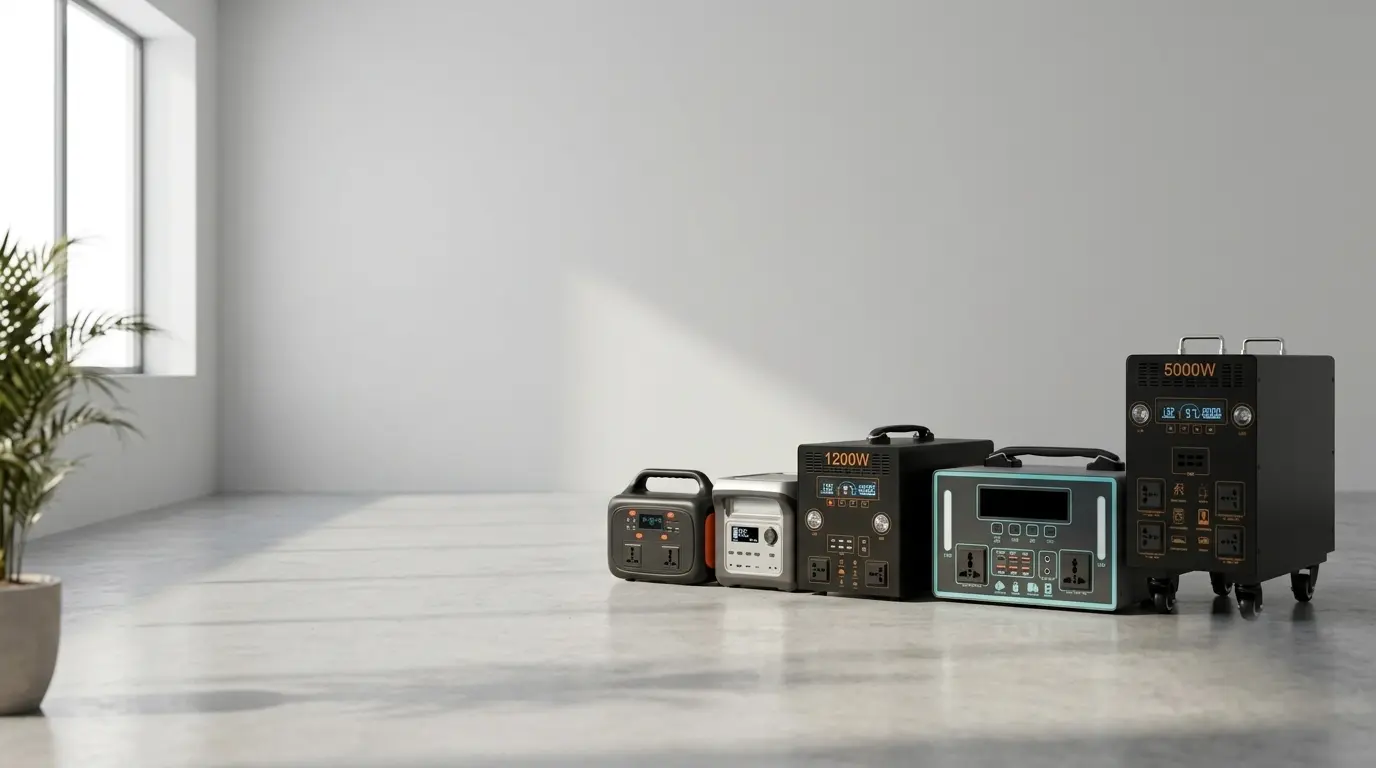
As a professional manufacturer integrating R&D, production and sales, CHUANHE ESS has provided end‑to‑end OEM/ODM services to global clients for years. Our portfolio ranges from 200W compact units to 5000W industrial systems – covering personal outdoor, professional, and commercial use cases. We know that different brand stages need different cooperation models. Our mission is to support you, whichever path you choose.
1. What Do OEM and ODM Mean?
OEM – Original Equipment Manufacturer
You own the design. The manufacturer produces strictly according to your technical specifications and applies your brand.
Simply put: you draw the blueprint, the factory builds it.
You keep full control over design, IP, and specifications. You provide complete documentation – schematics, BOM, samples. The manufacturer’s job is to turn your design into mass‑produced goods with guaranteed quality and on‑time delivery.
Best for:
- Companies with an existing product design or R&D team
- Brands that want to retain all IP and design authority
- Clients requiring deep customisation
ODM – Original Design Manufacturer
The manufacturer provides the design. You get a turnkey solution from concept to mass production. You can select from existing product platforms or co‑develop semi‑custom versions.
Simply put: the factory creates the solution, you brand it.
The manufacturer handles most of the R&D – industrial design, circuit schematics, prototyping, testing and validation. You only need to define market requirements and specifications; the rest is taken care of.
Best for:
- Brands that want to go to market quickly without heavy R&D investment
- Companies lacking an internal engineering team
- New entrants who want to reduce technical risk
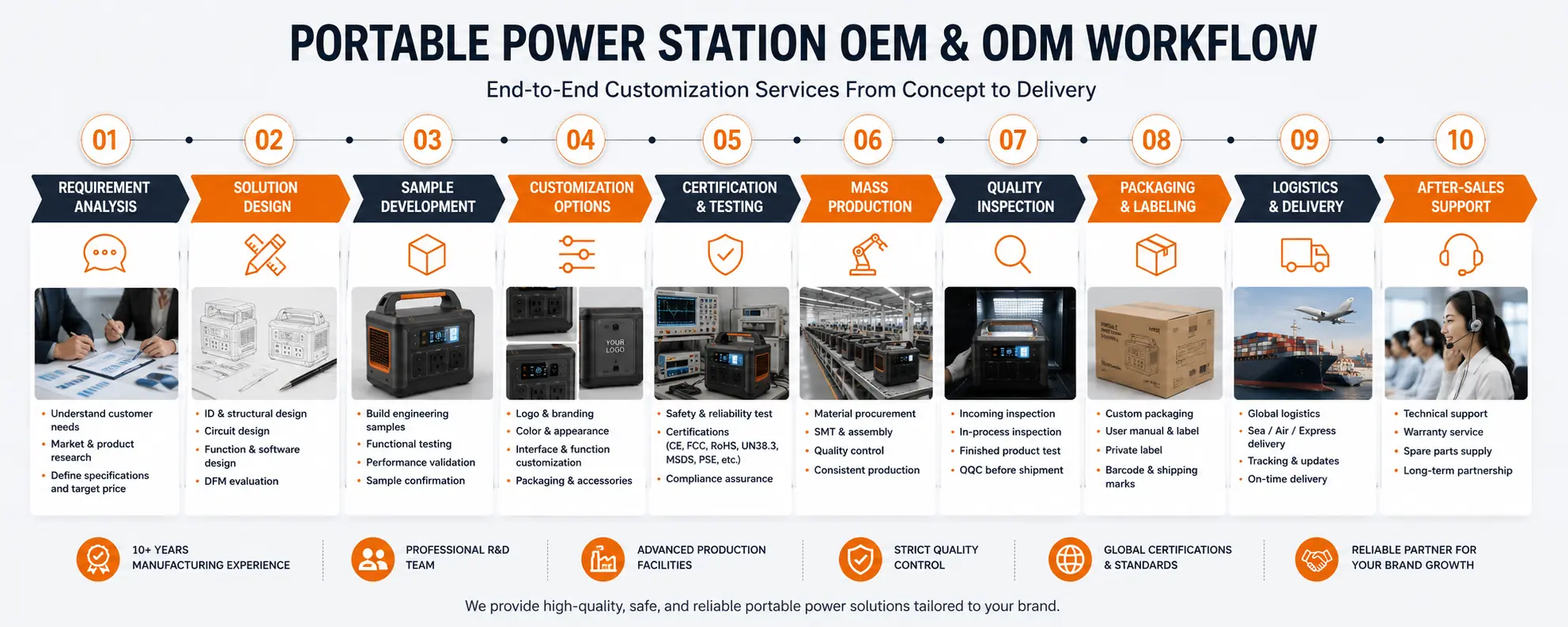
At CHUANHE ESS’s OEM/ODM manufacturing platform, we offer full transparency from concept design, prototyping, testing, to mass delivery – every step is traceable and manageable, no matter which model you choose.
2. At a Glance: Key Differences
| Comparison Aspect | OEM | ODM |
|---|---|---|
| Design ownership | Client retains all design rights | Manufacturer provides turnkey design |
| R&D responsibility | Client | Manufacturer |
| Customisation depth | High – ports, colors, branding, etc. | Medium to high – customisation on existing platforms |
| Minimum Order Quantity (MOQ) | Lower (can go as low as 50 units) | Higher (typically 100–200 units) |
| Sample lead time | ~2 days | ~7–10 days |
| Mass production lead time | ~25 days | ~30 days |
| Upfront investment | R&D costs borne by client | Design, tooling, certification covered by manufacturer |
| Supply chain control | Client manages every step | Manufacturer handles most logistics |
* Actual lead times and MOQ vary by product and manufacturer – contact the CHUANHE ESS sales team for precise figures.
3. How to Choose? Four Dimensions to Consider
Your R&D Capability
If you have an engineering team that can design circuits, BMS, and complete products, OEM lets you leverage your IP fully. You own the technical roadmap.
If you lack R&D resources, ODM saves you millions in development costs and years of trial‑and‑error. It’s like renting a ready‑made engineering team.
CHUANHE ESS employs 100+ R&D engineers specialised in BMS, LiFePO₄, smart BMS, APP, and IoT. ODM clients can directly brand our mature CH‑P series to slash time‑to‑market.
Your Market Strategy
If you pursue differentiation – unique appearance, features, user experience – OEM gives you total control over every detail.
If speed is your priority, ODM can take you from concept to shelves in 3–6 months, while OEM may take longer depending on your internal design cycle.
Our engineering team has been expanding since 2016, with deep expertise in BMS and communication integration. We deliver both deep‑development OEM projects and fast‑track ODM solutions.
Your Budget
OEM costs are mainly product‑focused – you pay for R&D, tooling, and certifications. If you already have a proven design, per‑unit cost can be lower.
ODM costs include design, development, tooling and certification services. The per‑unit price may be slightly higher, but you avoid large upfront R&D outlays, reducing financial pressure.
Your Long‑Term Vision
If you plan to build a lasting brand with proprietary technology and IP barriers, OEM is the way to go. You own the design and can iterate continuously.
If you want to test the market first, ODM is a low‑risk entry. Validate demand with proven products, then decide whether to move to OEM for full customisation later.
Our Power Station Portfolio (200W – 5000W)
Click the button below each series to view detailed specifications.
Explore our full portable power station portfolio →
4. Why Choose CHUANHE ESS as Your OEM/ODM Partner?
Independent BMS, PCS and EMS development – the heart of any power station. Self‑developed core technologies mean better quality and faster upgrades.
From 200W to 5000W, multiple form factors: suitcase, trolley, desktop, outdoor box, military‑style, RV station, stackable, and more.
UL, CE, RoHS, UN38.3, PSE, FCC – many models are already certified, drastically shortening your time to market.
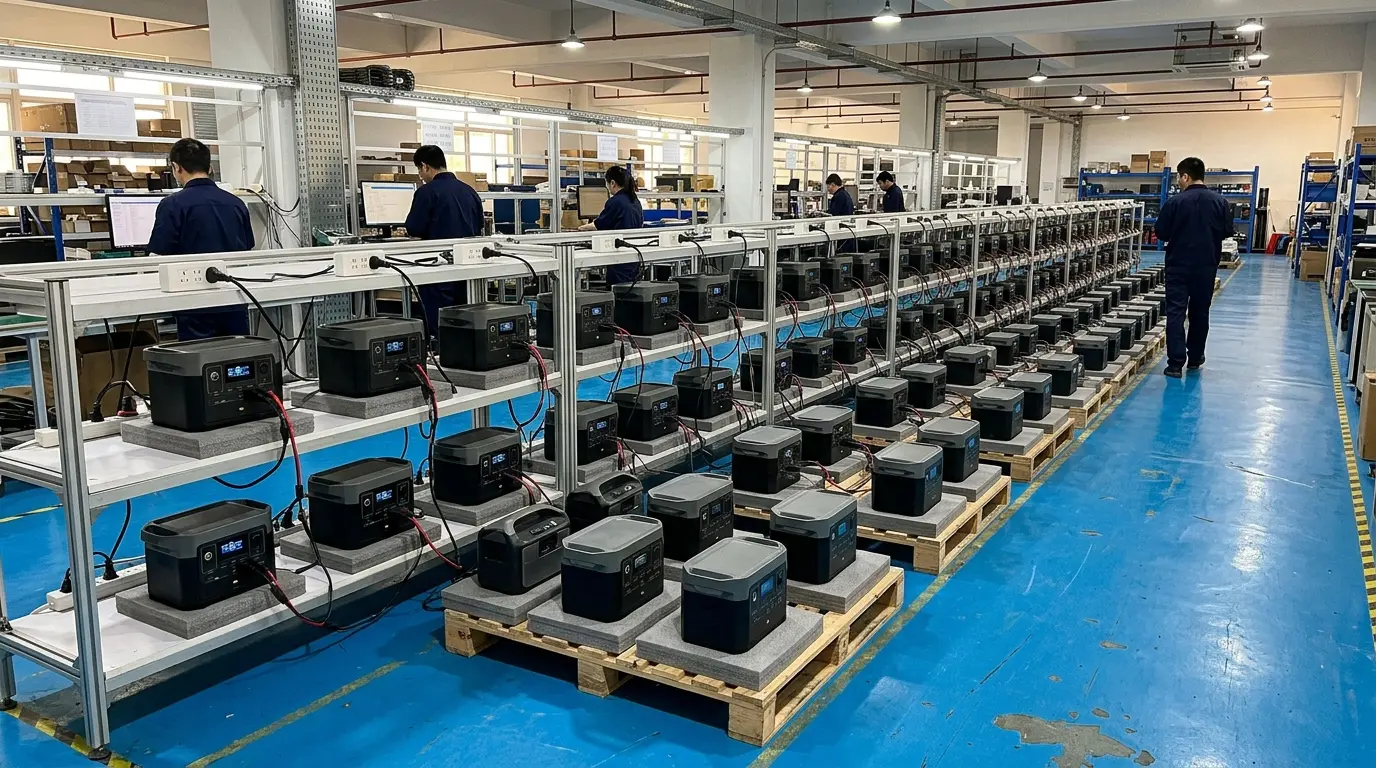
50,000 m² facility, 20 production lines, 5 PACK lines, 3 SMT lines – GWh‑level annual delivery with 99%+ on‑time rate.
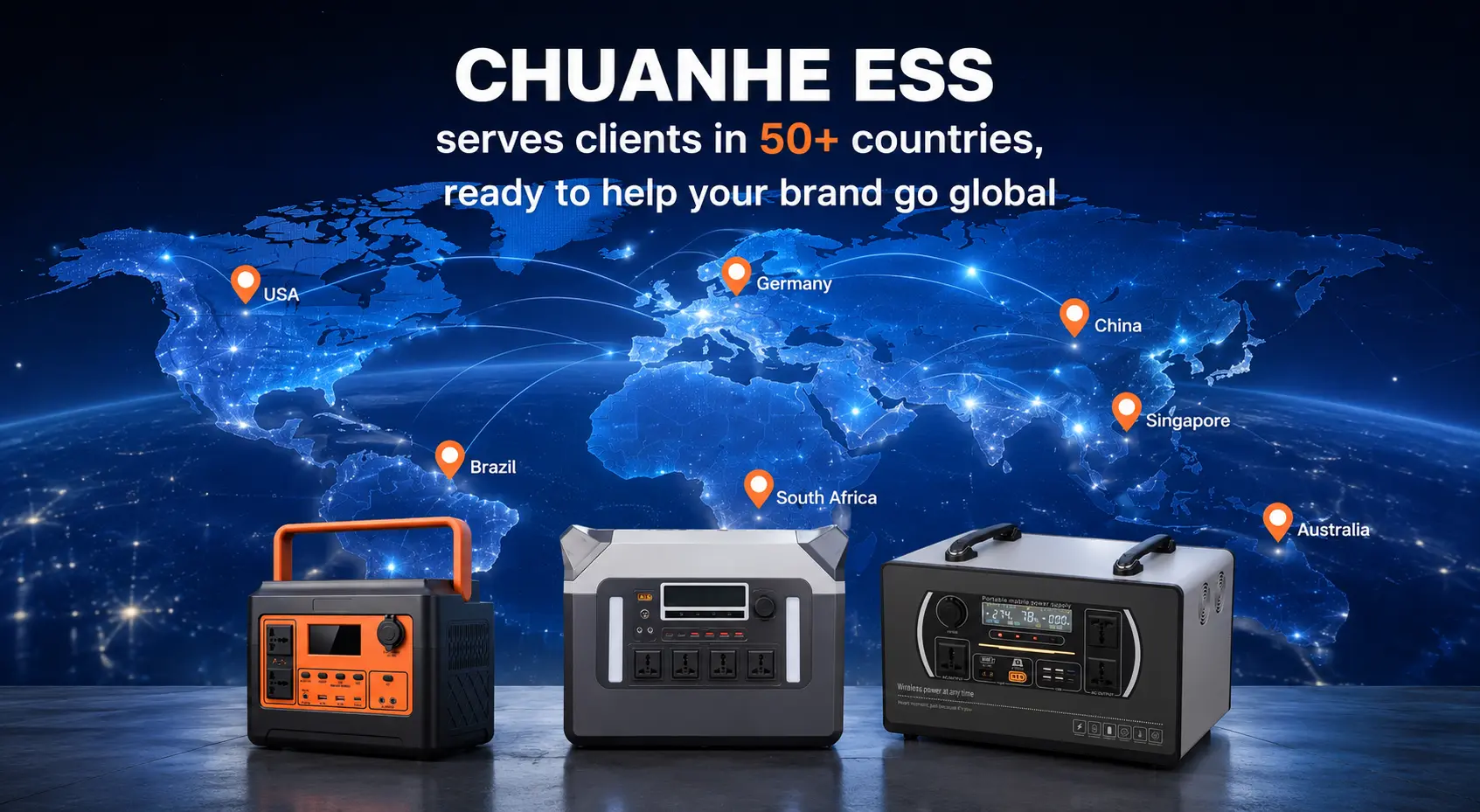
Clients in 50+ countries across Europe, North America, Australia, Asia, Africa and Latin America – we handle logistics, customs, and after‑sales support.
5. Final Verdict
There is no absolute better choice between OEM and ODM – it all depends on your brand stage and business goals.
- Have R&D, design, and want differentiation? → Choose OEM
- Want speed, simplicity, and lower risk? → Choose ODM
Whichever you pick, finding the right manufacturing partner is the real key to success. A capable, experienced and committed partner turns your vision into a great product – and great products build great businesses.
The portable power station market is in its golden growth window – and this window won’t stay open forever. Now is the time to decide and act.
Looking for a reliable OEM/ODM partner for portable power stations? Contact us – let’s turn your brand blueprint into products that sell worldwide.