


While camping and emergency backup power have become crowded red oceans, the real blue oceans are quietly forming in places you’ve probably never looked. These niche markets—where brands don’t fight price wars on e‑commerce platforms and don’t rely on influencer reviews—are steadily eating into the market share of traditional fuel generators. And they are growing at a pace that most of the industry has completely overlooked.
Here are 5 high‑growth industries where portable power stations are fundamentally reshaping how power is delivered. Every industry shares the same common traits: zero tolerance for noise, extreme reliability requirements, and zero patience for downtime. These are precisely the natural territories where LiFePO₄ portable power stations excel.
Market context (2026): The global portable power station market is valued at approximately USD 7.64 billion in 2026, with projections reaching USD 16.2–19.9 billion by 2032, growing at a CAGR of 6.6% to 22.4% depending on segment and region. The five industries profiled below collectively represent an additional $50+ billion in addressable power equipment spend that is actively transitioning from fuel‑based to battery‑based solutions.
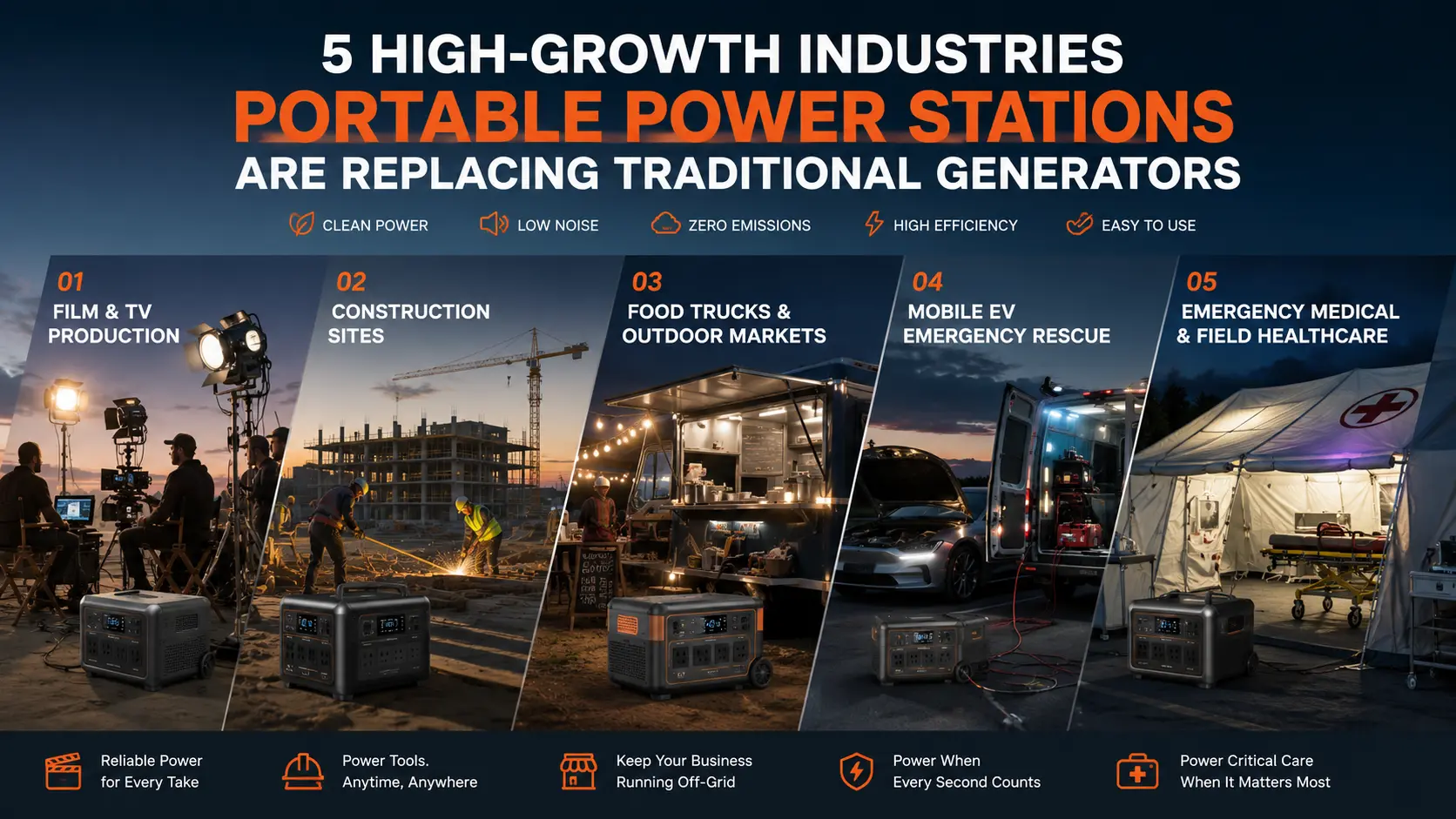
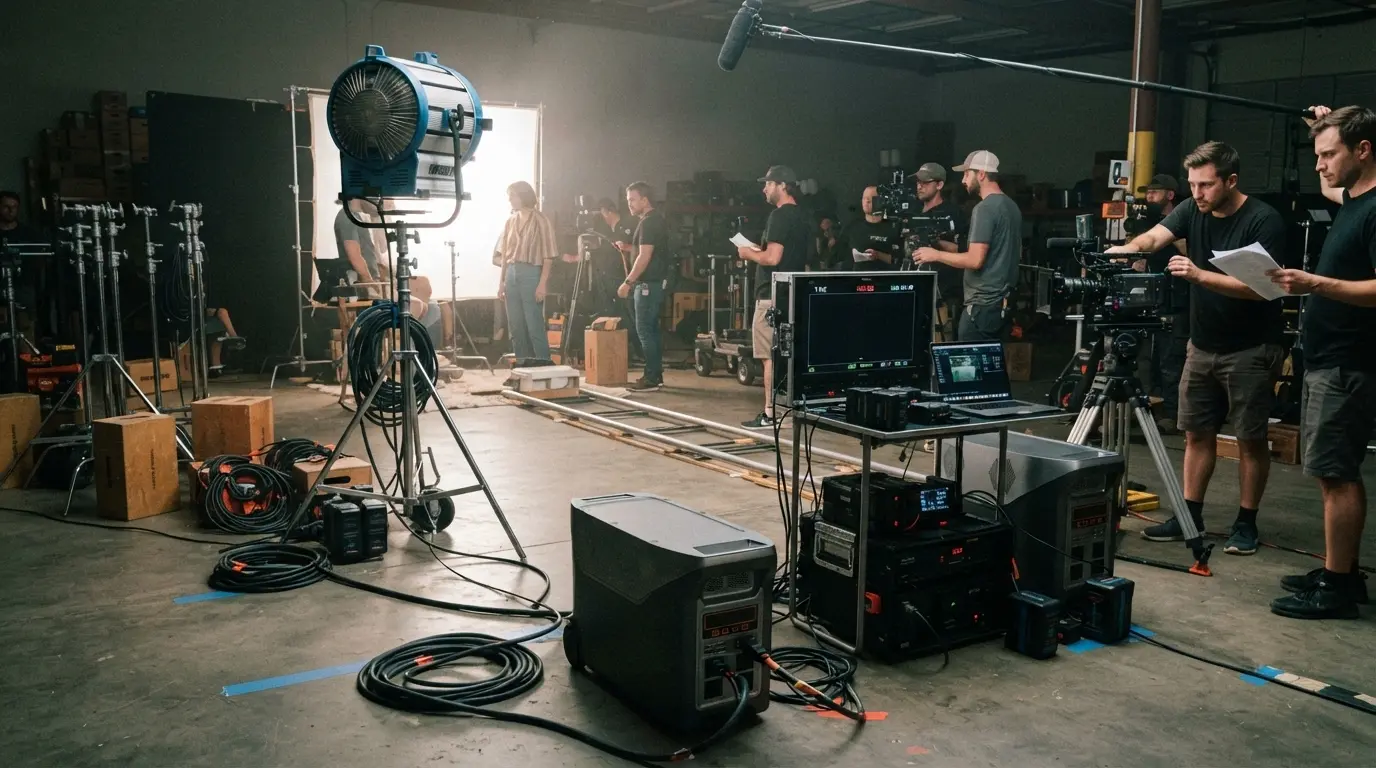
Industry 1: Film & Television Production — No Second Chances on Set
On a film set, on‑location sound recording is the most fragile link in the chain. The roar of a diesel generator 50 meters away is enough to ruin an entire audio track. The traditional workaround is to run extension cables and hide the generator even further away—but the longer the cable, the greater the voltage drop, and the higher the risk of voltage instability frying expensive camera equipment.
The hidden cost is even more severe. The average film crew burns through tens of thousands of dollars per day in operating costs. Every single production interruption caused by power issues is real money going up in smoke.
- Silent operation is a hard requirement, not a “nice‑to‑have”
- Multi‑voltage output (110V/220V/USB/DC12V) for diverse equipment
- Plug‑and‑play deployment—no electrician required on site
How CHUANHE ESS Solves It
Our portable power stations are equipped with pure sine wave inverters that deliver output waveform identical to grid power—causing no cumulative damage to the sensitive electronics of high‑end cinema cameras like Sony Venice, ARRI Alexa, or RED. The units operate at near‑silent levels and can be placed within 5 meters of the shooting location without interfering with audio capture.
For location shoots, solar panels paired with our stations enable all‑day off‑grid power supply—burning zero fuel and producing zero exhaust emissions. Lighting crews, focus pullers, and DIT data stations can all draw power simultaneously from a single unit—one connection, instant operation.
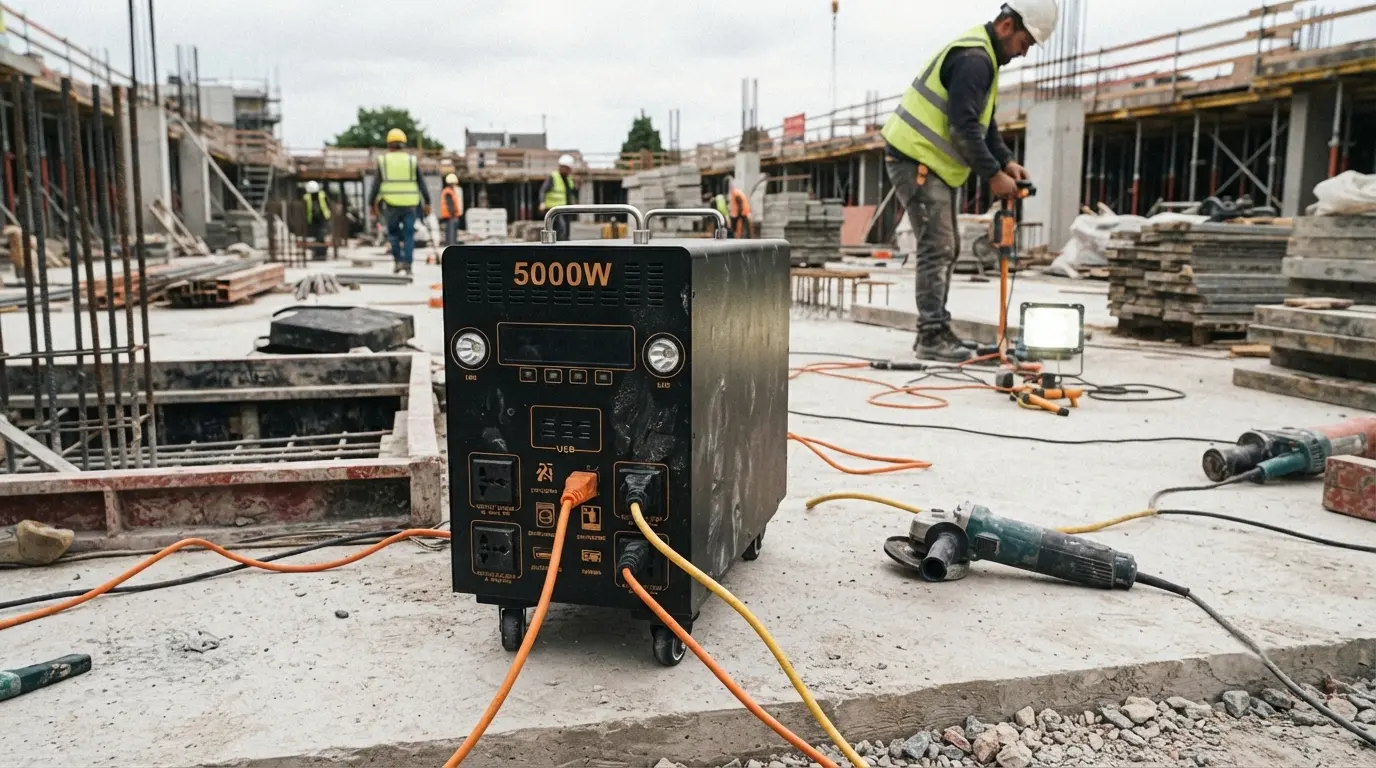
Industry 2: Construction Sites — Idle Time Is the Biggest Cost
Power needs on a construction site seem simple enough—just running drills, saws, and lighting. But the real costs are hidden in plain sight:
Every hour a diesel generator runs consumes more than just fuel. It also eats up maintenance labor, oil changes, air filter replacements, diesel theft prevention costs, and the risk of noise violation fines. More critically—when a generator breaks down, repair waiting time translates directly into idle losses. On tight‑deadline projects, even one day of power interruption can trigger tens of thousands of dollars in penalty claims.
The site environment is extremely harsh: metal dust causes electrical shorts, cement dust clogs cooling systems, rainwater causes short circuits, and impacts crack enclosures. Consumer‑grade power stations typically don’t survive more than 6 months.
- Dust and water resistance is mandatory (IP54 minimum)
- V0‑rated flame‑retardant enclosure to prevent fire hazards from electrical sparks
- Wide operating temperature range (-10°C to 50°C)
- Impact‑resistant structural design
How CHUANHE ESS Solves It
Our engineering team has redesigned the product structure specifically for construction site conditions. The V0‑rated flame‑retardant enclosure will not ignite or sustain combustion under high‑temperature or short‑circuit conditions—a mandatory requirement for site safety inspections. Internal components are coated with conformal coating to effectively resist moisture, salt spray, and dust ingress.
For continuous operation requirements, our high‑capacity portable power stations (up to 1200W) can serve as a reliable on‑site power source—powering equipment during the day, recharging from the grid or solar at night, and repeating the cycle the next day. Compared to diesel generators, the total cost of ownership is reduced by over 20%, with zero emissions throughout the entire lifecycle.
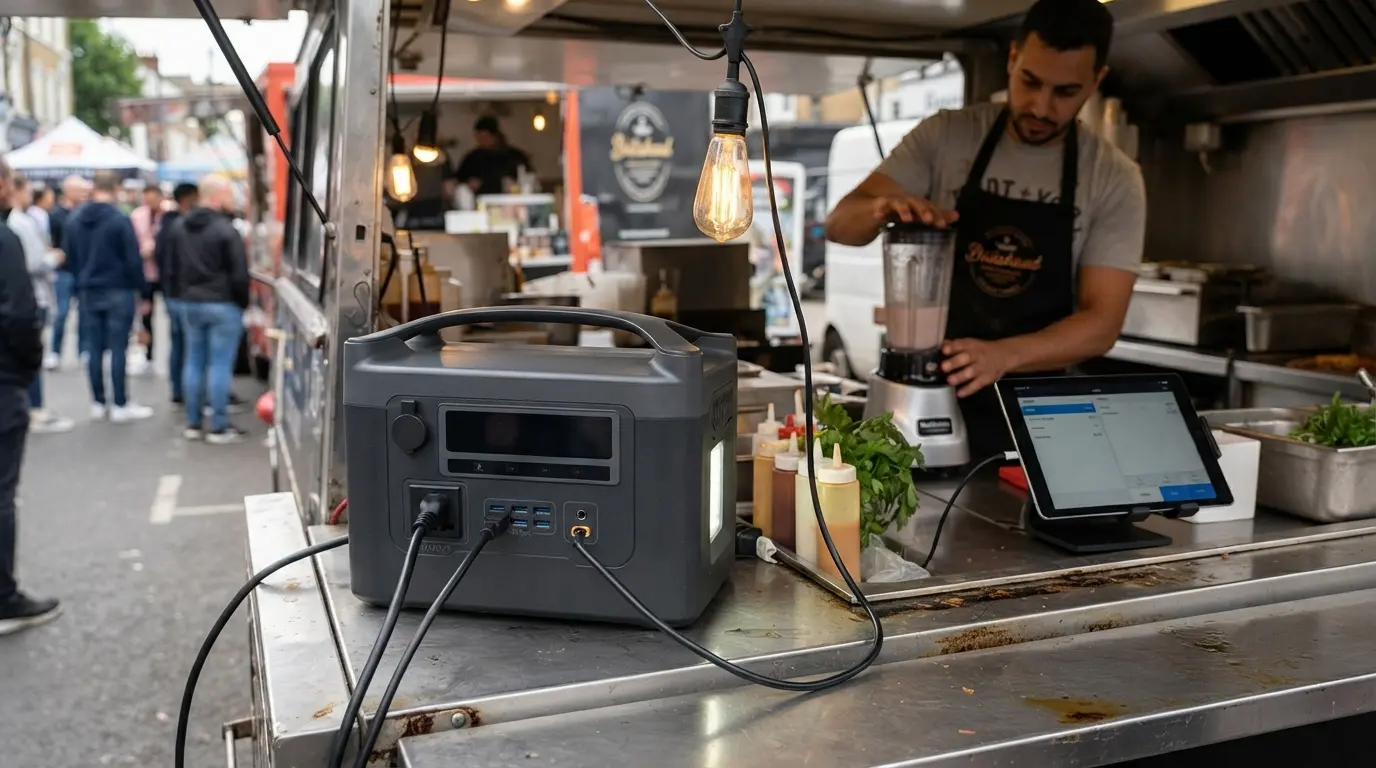
Industry 3: Mobile Food Vendors & Outdoor Markets — Food Safety Depends on Power Stability
Behind every food truck is a complete commercial kitchen: refrigerators for ingredient storage, freezers for frozen goods, coffee machines for hot beverages, and grills for on‑site cooking. A 2‑hour refrigerator outage can spoil thousands of dollars’ worth of ingredients; unstable voltage to a coffee machine delivers inconsistent, unreliable quality that directly translates into bad reviews.
Outdoor markets and music festival food zones face even more acute problems: temporary site power capacity is limited, and multiple vendors drawing power simultaneously cause voltage drops. Disputes between vendors over limited plug points are far more common than most people realize.
- Large capacity (at least 768Wh for full‑day operation)
- Multiple AC outlets (to run refrigerator + coffee machine + lighting simultaneously)
- Fast recharging (top up during lunch break)
- Lightweight and portable (daily load‑in/load‑out)
How CHUANHE ESS Solves It
Our 1200W Series (768Wh – 1100.8Wh) is the sweet spot for mobile food vendor scenarios. A single unit can simultaneously power a commercial refrigerator (~150W), a coffee machine (~1000W), and LED lighting (~50W)—delivering a full 8‑hour operating day.
For vendors requiring even more power, our parallel connection solution doubles the output without adding any extra noise. At the end of the day, simply lift and carry—no fuel to drain, no oil to change, no hard‑starting engine to worry about the next morning.
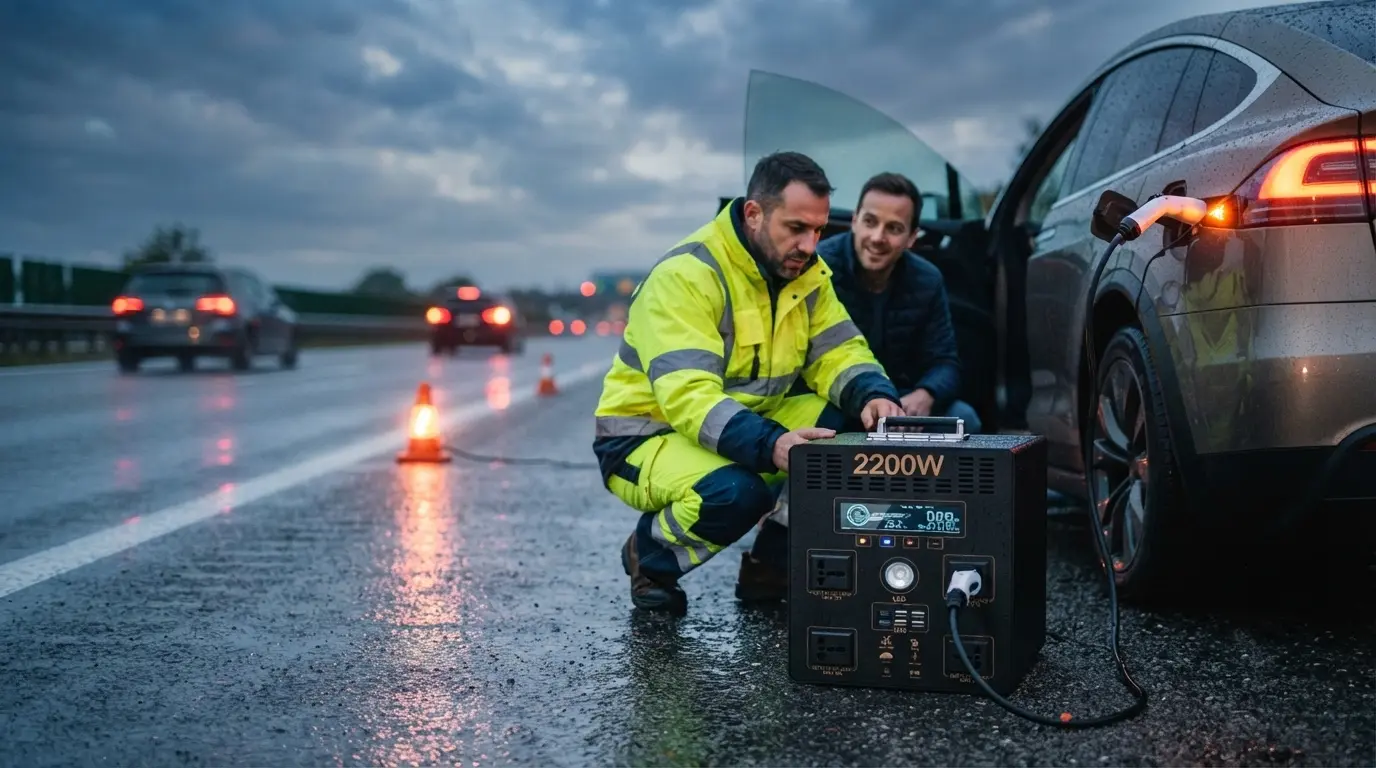
Industry 4: Mobile EV Emergency Rescue — Where Charging Stations Can’t Reach
In 2026, China’s new energy vehicle fleet is projected to exceed 40 million units, yet charging infrastructure remains highly uneven—clustered in cities, insufficient on highways, and almost non‑existent in remote areas. Every single day, thousands of EVs run out of charge and are stranded roadside.
The traditional rescue solution is to tow the vehicle to the nearest charging station—costing hundreds of dollars per rescue and taking 2–3 hours of waiting time. For tow truck operators, limited fleet capacity during peak hours cannot meet all demand. A solution that doesn’t require towing and provides on‑site emergency charging means double the service efficiency.
- High capacity (2kWh minimum)
- Supports high‑power DC output (compatible with different vehicle voltage platforms)
- Portable design (fits in a rescue vehicle’s trunk)
- Fast emergency recharging capability
How CHUANHE ESS Solves It
Our high‑capacity portable power stations (up to 1200W) can deliver on‑site emergency charging for stranded EVs. Using compatible DC‑DC conversion modules, they can provide emergency power to vehicles across different voltage platforms. A 30‑minute charge can deliver enough range to reach the nearest charging station.
For light‑duty rescue scenarios, the 1200W portable station paired with a dedicated vehicle‑side converter can deliver approximately 15–20 kilometers of additional range roadside—enough to get a stranded driver out of a dangerous situation. The entire system fits in the trunk of a rescue vehicle and deploys in under three minutes upon arrival.
Industry 5: Emergency Medical & Field Healthcare — The Lifeline When the Grid Fails
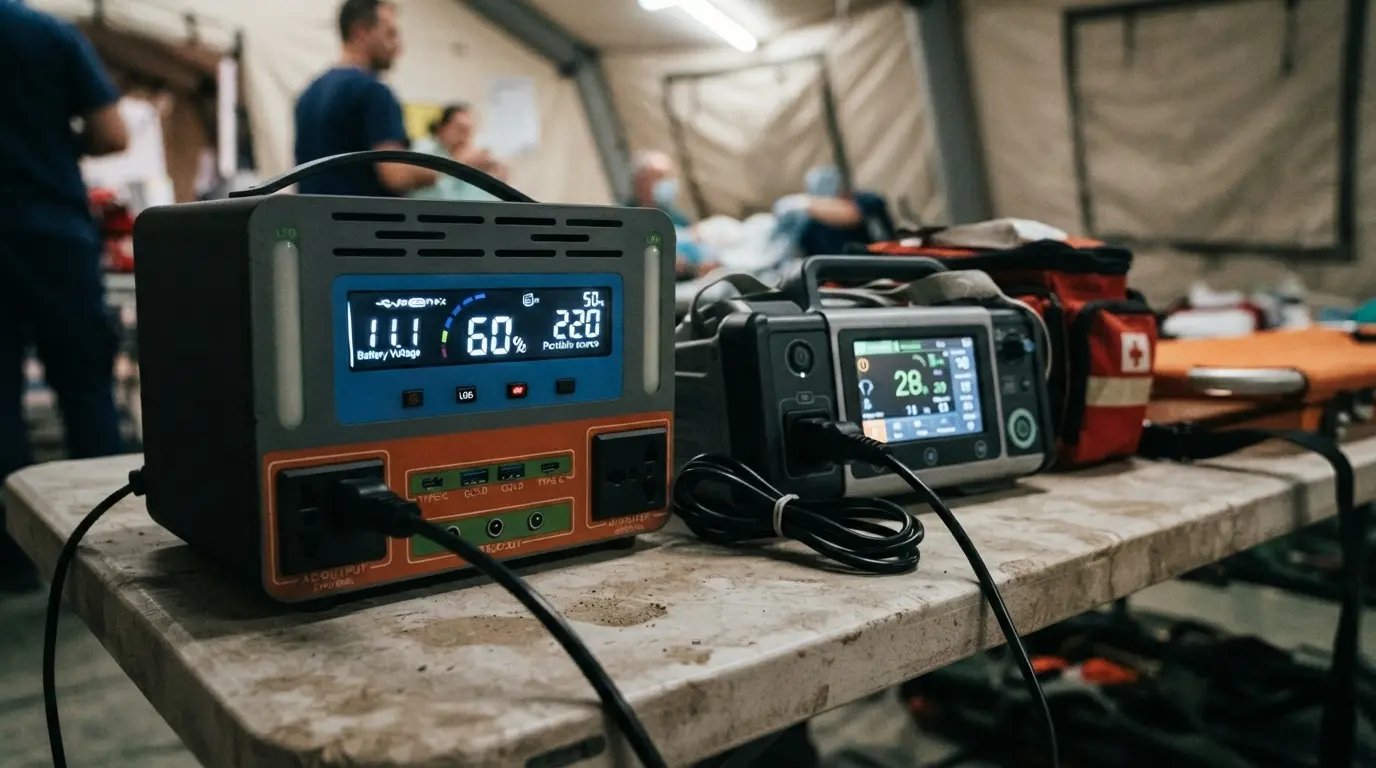
Emergency scenes, temporary medical stations, field hospitals, disaster relief shelters—they all share the same reality: grid power is unavailable, but medical equipment cannot stop. The consequences of a ventilator losing power need no explanation. A monitor losing signal means losing visibility on patient vitals. A vaccine refrigerator losing temperature control means an entire batch of vaccines is destroyed.
Traditional generators create noise that interferes with doctor‑patient communication. Exhaust fumes make them unusable in enclosed spaces. And pull‑start mechanisms—in a time‑critical emergency—are simply not acceptable.
- UPS functionality (zero‑transfer‑time when grid drops)
- Pure sine wave output (medical devices reject modified sine wave)
- Silent operation (no interference with patient care environment)
- Safe for indoor use (zero exhaust emissions)
How CHUANHE ESS Solves It
Our products feature <20ms UPS automatic transfer switching—when the grid suddenly fails, the unit takes over power delivery within a time frame invisible to the human eye. Medical equipment never shuts down, never restarts, never interrupts. The pure sine wave inverter ensures sensitive devices like ventilators, patient monitors, and infusion pumps operate safely—without false alarms or component damage caused by waveform distortion.
LiFePO₄ battery cells are safe for indoor use, producing zero exhaust emissions. From community clinics to field emergency teams, from ambulance backup power to mobile vaccine cold‑chain transport—we are providing frontline healthcare workers with the most critical kilowatt‑hour they will ever need.
Why These 5 Industries Are Abandoning Fuel Generators
| Industry | Adoption Velocity | Key Drivers |
|---|---|---|
| Film & Television | Rapid Replacement | Silent operation and zero emissions are now industry standards |
| Construction Sites | Accelerating Replacement | Rising environmental fines + escalating fuel costs |
| Mobile Food Vendors | Steady Replacement | Lightweight equipment + maintenance‑free advantage |
| EV Emergency Rescue | Pre‑Explosion Phase | Exploding EV ownership (40M+ in 2026) + range anxiety driving demand |
| Emergency Medical | Irreversible | Indoor safety requirements + precision equipment sensitivity |
Is Your Brand Ready to Enter These Markets?
CHUANHE ESS offers more than a single product—we deliver end‑to‑end solutions spanning the full power spectrum from 300W to 1200W in portable form factors, with higher‑capacity stackable systems also available for larger installations. Every product platform supports:
- Brand Customization — Logo, color scheme, packaging design
- Feature Customization — Output ports, capacity, BMS parameters
- Certification Support — UL, CE, PSE, and other market‑specific requirements
Whether your customers are film equipment rental houses, construction contractors, food truck operators, roadside rescue services, or medical device distributors—our portfolio breadth and engineering depth are ready to help you unlock these underestimated billion‑dollar markets.
📊 The common name for all five industries is “incremental growth.”
They aren’t waiting on e‑commerce shelves—but every single one of them has stable, recurring bulk procurement demand. In 2026, the total addressable power equipment spend across these five sectors exceeds $50 billion, and the transition to battery‑based solutions is accelerating.
Contact us today — get tailored product solutions for your target industries.
This guide is designed for global brands, distributors, and procurement professionals exploring high‑growth B2B markets for portable power stations. For industry‑specific case studies and customized solutions, please contact our team directly.