


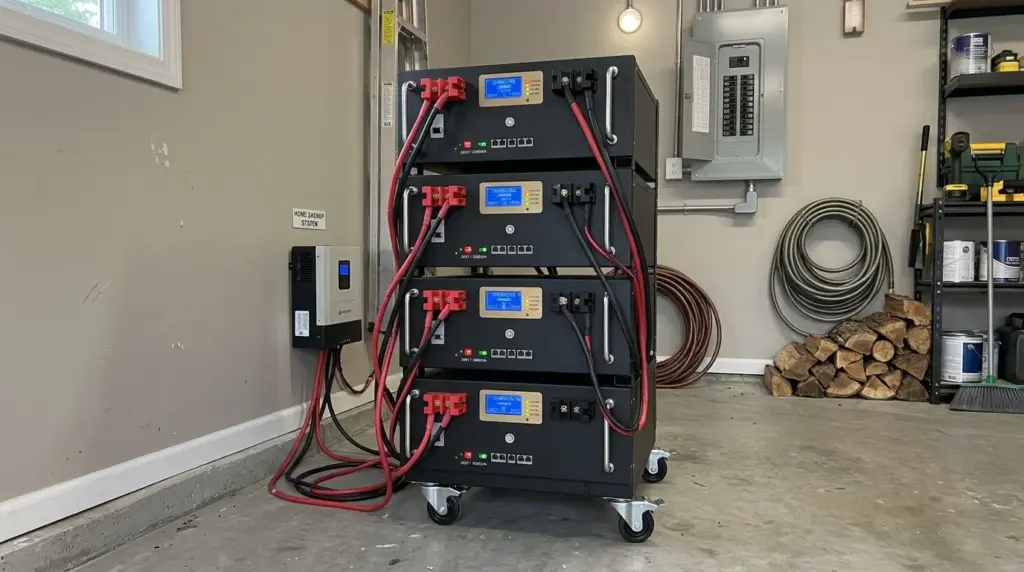
📦 For solar battery distributors, lifespan is not just a technical specification—it is a profit-and-loss metric.
When you stock batteries for resale, every premature failure results in a warranty claim, a logistics headache, and a dissatisfied installer who may take their future business elsewhere. When a battery outlasts its expected cycle life, your dealers stay happy, your after-sales support costs drop, and your brand earns a reputation for reliability.
So, how long do these systems actually last in the real world? The answer ranges from 3 to over 15 years, depending entirely on three factors: chemistry, Depth of Discharge (DoD), and operating temperature.
This guide provides the hard data you need to evaluate supplier specifications, educate your installer network, and minimize your post-sale liabilities.
1. Distributor’s Reality: Cycle Life vs. Shelf-to-Grave Risk
As a wholesaler, you need to understand two distinct timelines that impact your business:
| Metric | Definition | The Distributor’s Risk |
|---|---|---|
| Cycle Life | Number of charge/discharge cycles before capacity drops to 60-80% of original | Determines how long the end-user will use the battery. If lower than promised, expect a surge in warranty claims in Year 4–6. |
| Calendar Life | Age-based degradation, regardless of use (sitting in your warehouse or idle on a wall) | Crucial for inventory planning. Batteries degrade even on your shelves. Do not overstock slow-moving SKUs. |
⚠️ Critical insight for wholesalers: A battery with 10,000 cycles is worthless if it has a calendar life of only 8 years. You must evaluate both metrics when choosing which brands and chemistries to distribute.
2. Chemistry Showdown: What to Stock for Your Installers
Your product portfolio must align with different market segments (off-grid, residential backup, or daily self-consumption). Here is the hard data on how each chemistry performs, and what it means for your warranty return rates.
| Battery Chemistry | Typical Cycle Life (80% DoD) | Expected Service Life (Years) | Distributor Warning |
|---|---|---|---|
| Lead-Acid (AGM/Gel) | 500 – 1,200 cycles | 3 – 7 years | High return risk. End-users expect modern lifespan. Stock only for extreme budget or backup-only projects where cycling is rare. |
| Lithium-ion (NMC) | 2,000 – 4,000 cycles | 7 – 10 years | Moderate. Higher energy density, but sensitive to heat. Do not sell these into hot climate zones without active cooling—returns will spike. |
| Lithium Iron Phosphate (LFP) | 4,000 – 10,000+ cycles | 10 – 15+ years | The “set and forget” SKU. Minimal degradation (1-2% per year). Lowest return rates. Recommend as your core volume line. |
📌 Recommendation for your portfolio: If you are a wholesaler serving residential and commercial installers, LFP should constitute at least 70% of your stock. Lead-acid is dying in the daily-cycling segment—stocking too much ties up capital in obsolete technology that dealers no longer want.
3. Depth of Discharge (DoD): The #1 Cause of Installer Complaints
When an installer calls your support line complaining that a 2-year-old battery is “dead,” the root cause is almost always improper DoD settings.
Depth of Discharge is the percentage of capacity taken out of the battery before recharging.
- Example: A 10kWh battery delivering 8kWh has an 80% DoD.
The relationship between DoD and lifespan is strictly inverse. Here is the real data you must share with your B2B clients (the installers):
| Chemistry | Average DoD Setting | Achievable Cycle Life | What this means for your warranty exposure |
|---|---|---|---|
| LFP | 100% (Full discharge) | ~3,500 cycles | High risk. Installers who max out the system cut the lifespan by 40%. |
| LFP | 80% (Standard) | 6,000 cycles | Industry benchmark. Safe territory. |
| LFP | 50% (Shallow) | 10,000+ cycles | Very safe. Battery will likely outlive the inverter. |
| Lead-Acid | 50% (Max allowed) | 500 – 1,200 cycles | If they run lead-acid to 80% DoD, expect a warranty claim within 18 months. |
✅ Wholesaler Action Point: When you sell batteries, provide a one-page “DoD Best Practice” guide to your installers. By teaching them to set the inverter cut-off to 80% DoD (rather than 100%), you can potentially double the real-world life of the battery and halve your post-sale support tickets.
4. Temperature: The “Silent Killer” in Your Sales Territory
Geography matters. As a distributor, if you are shipping containers of batteries to different climate zones, you must adjust your sales pitch (and your product selection).
The Arrhenius Rule: For every 10°C rise in ambient temperature above 25°C, the chemical degradation rate of a lithium battery doubles.
| Operating Environment | Average Annual Temp | Expected LFP Lifespan | Logistical Advice for Distributors |
|---|---|---|---|
| Cool/Temperate (Northern Europe, Canada) | 10°C – 20°C | 14 – 15 years | Sell standard indoor units. Shelf-life in your warehouse is excellent. |
| Moderate (UK, Central EU, Northern US) | 20°C – 28°C | 12 – 14 years | Standard LFP works perfectly. Focus on proper indoor installation. |
| Hot (Southern US, Middle East, SE Asia) | 30°C – 45°C+ | 6 – 8 years | WARNING: Do not sell standard IP20 indoor batteries here. You must distribute units with active liquid cooling or forced air HVAC to prevent mass failures. |
🏚️ Warehouse Warning: Do not store your container stock in unshaded metal warehouses in summer. High warehouse temperatures (above 40°C) accelerate calendar aging before the battery is even sold. Maintain your storage facility at 15–25°C to preserve the state-of-health (SoH) of your inventory.
5. Capacity Degradation: Managing End-User Expectations
Batteries do not “die” suddenly; they fade gradually. When you sell to an installer, they need to know that a 10kWh system will not deliver 10kWh in Year 10.
Here is the standard degradation curve you should publish on your spec sheets:
| Year of Operation | Remaining Capacity (LFP) | Remaining Capacity (NMC) | Installer Selling Point |
|---|---|---|---|
| Year 0 (New) | 100% | 100% | Full system performance. |
| Year 5 | 92% – 95% | 88% – 90% | Still performing well. Slightly less evening backup. |
| Year 10 | 80% – 88% | 75% – 82% | End of typical warranty period. System still usable for peak shaving. |
| Year 15 | 70% – 80% | N/A (Usually retired) | LFP reaches end-of-life here, but still provides significant value. |
💡 Crucial Business Tip: When your dealers sell these systems, advise them to design the system with a 10-15% oversizing buffer. For example, if the customer needs 10kWh daily, install a 12kWh battery. This buffer masks early degradation, ensuring the customer remains satisfied for 8+ years, drastically reducing the chances of an awkward warranty call to your distribution center.
6. The Distributor’s Economic Formula: Stock Turnover vs. Lifespan
As a wholesaler, you have to balance price points. Cheaper batteries (NMC or Lead-Acid) have a lower entry cost but higher “cost-per-cycle” for the end-user. However, for you, the distributor, here is the risk:
- High-turnover, short-lifespan products (Lead-Acid/NMC): You sell units faster (good for cash flow), but you face higher warranty logistics costs (RMA shipping, testing, restocking). By Year 5, you might be dealing with 15-20% failure rates.
- Low-turnover, long-lifespan products (LFP): Higher upfront price (slower initial sell-in), but you build a “trusted supplier” reputation. Installers will pay a premium for your LFP stock because they know they won’t have to go back to replace it for a decade.
✅ Recommendation: Build a two-tier product strategy.
- Tier 1 (High Volume): LFP batteries with 6,000+ cycles. This is your reputation builder.
- Tier 2 (Bargain Backup): A cheaper NMC or high-quality AGM for customers who only need backup for 10-20 outages per year.
7. Key Selling Points for Your Installer Network
When you pitch to your B2B clients (the electricians and system integrators), arm them with these 4 “lifespan facts” to help them close deals:
- The “80/50” Rule: Never discharge below 80% if you want the advertised 10-year life. For lead-acid, never below 50%.
- The “Shade” Rule: Install the battery on the north-facing wall (in the northern hemisphere) or in a basement. Avoid garages facing west/south.
- The “Firmware” Rule: Ensure the inverter’s BMS communication cable is correctly connected. The BMS (Battery Management System) actively balances cells to prevent premature aging—a disconnected BMS kills the battery silently.
- The “Maintenance” Rule: For LFP, zero maintenance is required. For lead-acid, top up distilled water (flooded types) every 6 months—or sell them a sealed AGM to avoid this hassle.
Final Verdict for Wholesalers
How long do solar batteries last?
- If you are selling Lead-Acid: Expect 3–5 years and prepare for replacements.
- If you are selling NMC Lithium: Expect 7–10 years but warn installers about temperature sensitivity.
- If you are selling LFP Lithium: Expect 10–15 years with proper DoD management, making it the lowest-risk product in your catalog.
📊 The Bottom Line: As a distributor, your best strategy to reduce after-sales costs is to prioritize LFP batteries in your inventory, provide strict DoD guidelines to your dealers, and segment your sales strategy by regional climate. Do these three things, and your warranty return rate will drop by over 50% within the first 3 years of deployment.
This guide is designed for professional distribution partners. For specific system sizing, always coordinate with certified installation engineers to match the battery to the specific energy consumption profile of the end-user.