


This article pulls back the curtain on the complete ODM customization process for portable power stations. Whether you are a startup brand launching your first product or an established distributor expanding your portfolio, understanding this process will help you make informed decisions and build a successful partnership with your manufacturer.
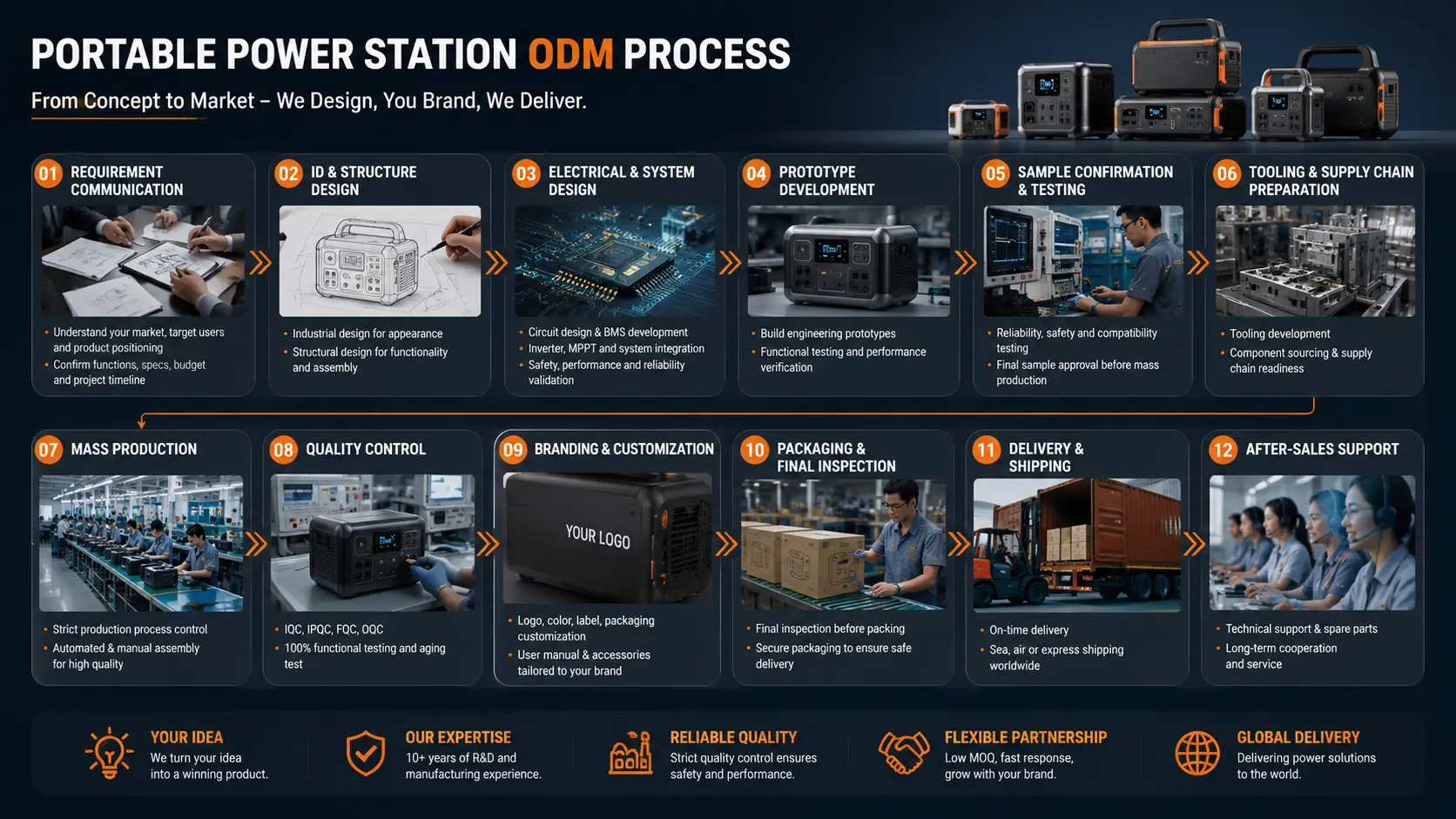
At CHUANHE ESS, we believe in transparency, collaboration, and long-term partnerships. Since 2016, we have been helping global brands, distributors, and project developers bring high-quality energy storage solutions to market through our OEM and ODM services. Here is exactly how we do it—step by step.
Phase 1: Needs Analysis & Concept Definition
Every great product starts with a clear understanding of the market opportunity and the brand’s vision. This is the most critical phase of the entire ODM process—and the one where your input matters most.
What Happens During This Phase
The ODM manufacturer works closely with you to define:
- Target market and end-user profile — Who are you selling to? Outdoor enthusiasts? Emergency preparedness buyers? Construction professionals? RV travelers? The answer determines everything from product design to feature set.
- Power and capacity requirements — What is the target output power (200W to 5000W) and battery capacity? Our engineering platform covers the complete power spectrum, from compact 200W personal units to 5000W industrial-grade systems.
- Form factor and design preferences — Do you envision a hand-carry design, a wheeled suitcase style, a rugged outdoor box, a military-grade case, or a sleek desktop unit? Each form factor serves different markets and user experiences.
- Feature set — Which smart features will differentiate your product? WiFi/Bluetooth connectivity, custom-branded IoT App, OTA firmware updates, wireless charging, built-in Bluetooth speaker, LED floodlight, pure sine wave inverter, UPS function, or MPPT solar charging?
- Certification requirements — Which markets are you targeting? North America requires UL certification; Europe requires CE/RoHS; Japan requires PSE; global shipping requires UN38.3.
- Budget and timeline — What is your target price point? When do you need the product on shelves?
Your Role and Decision Points
This is where you have maximum influence over the final product. The more detailed your brief, the more accurately the manufacturer can translate your vision into reality. CHUANHE ESS provides a dedicated project manager who guides you through each decision, ensuring no detail is overlooked.
Estimated duration: 1–4 weeks, depending on project complexity and client responsiveness.
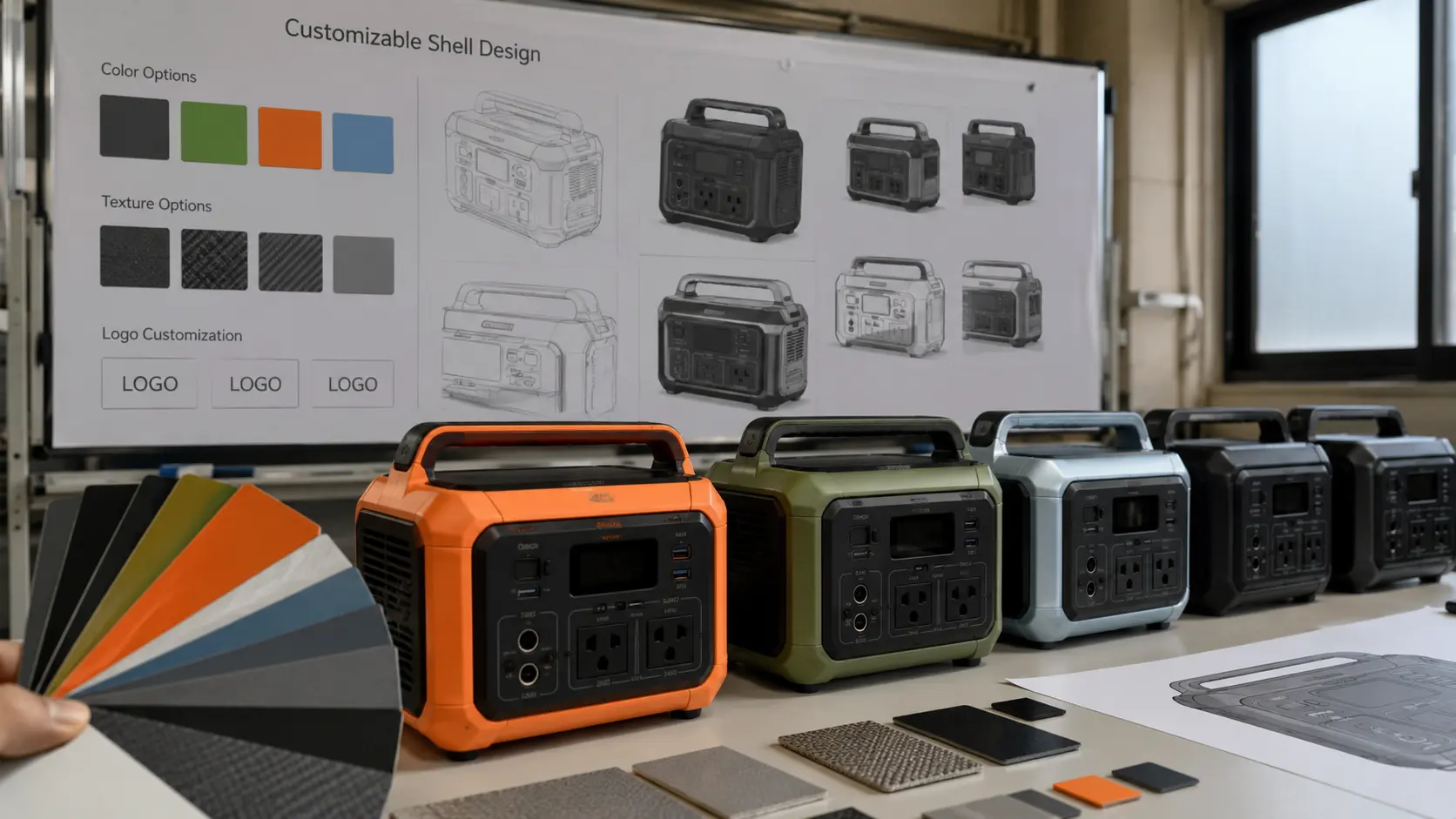
Phase 2: 3D Rendering & Circuit Design
Once the concept is defined, the engineering team transforms your vision into technical specifications. This phase bridges the gap between “what we want to build” and “how we build it.”
What Happens During This Phase
- Industrial design and 3D rendering — Our design team creates detailed 3D models of the product, showing外观, dimensions, port placement, display layout, and ergonomics. You see exactly what your product will look like before any physical prototype is built.
- Mechanical design and structural engineering — Engineers design the internal structure, component mounting, cooling systems, and enclosure to ensure durability, heat dissipation, and ease of assembly.
- PCB layout and circuit design — The electrical engineering team designs the printed circuit board (PCB) layout, power distribution, inverter circuitry, and BMS integration.
- BMS (Battery Management System) development — Our self-developed intelligent BMS is the brain of every portable power station, continuously monitoring battery performance and providing comprehensive protection against overcharging, overheating, overcurrent, and short circuits.
- Firmware and software development — For smart features like App connectivity, OTA updates, and wireless charging, our software team develops the embedded firmware and can even create a custom-branded mobile App for your product.
Your Role and Decision Points
This is where you approve the design direction. You review the 3D renders, confirm the technical specifications, and sign off on the circuit design. At CHUANHE ESS, we maintain full transparency throughout this phase—you are never left wondering what is being built.
Estimated duration: 2–6 weeks, depending on customization depth.
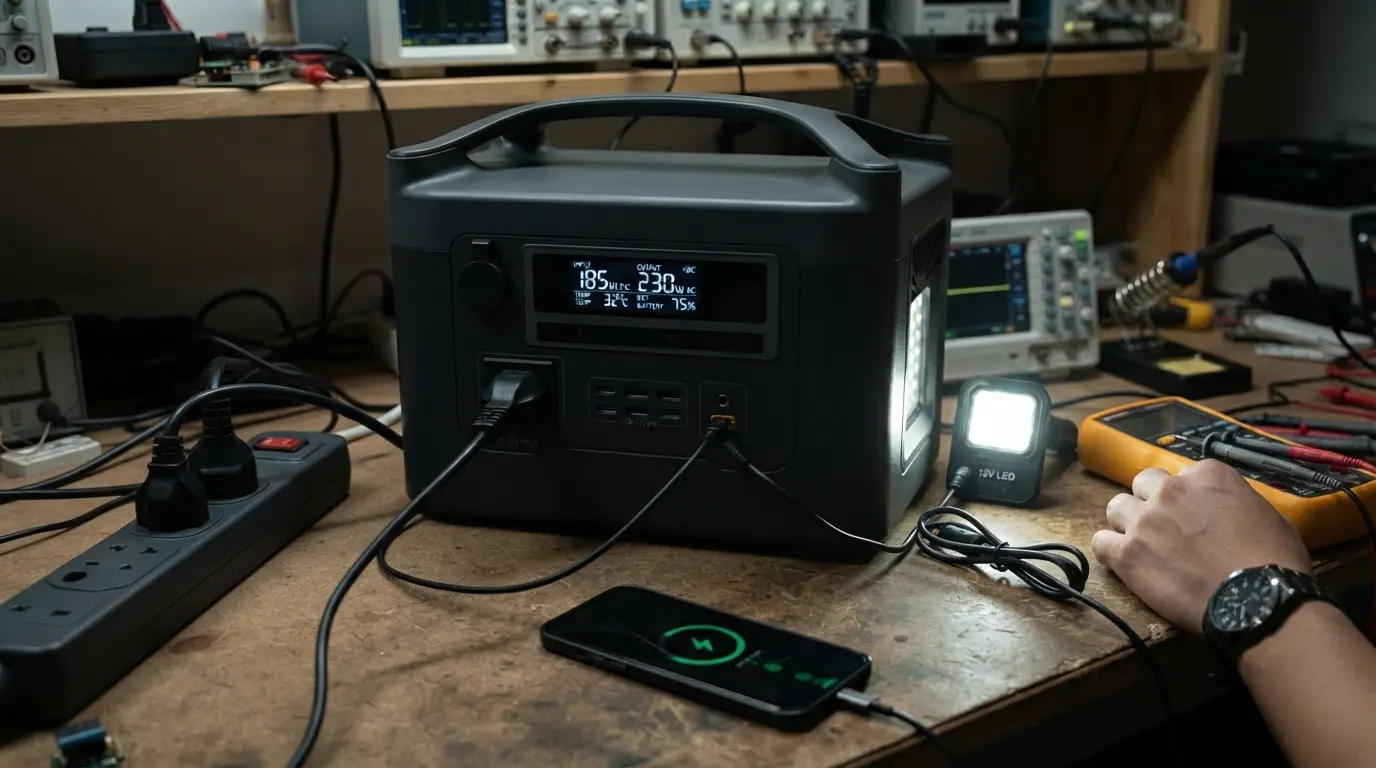
Phase 3: Prototyping & Extreme Testing
This is where the rubber meets the road. A functional prototype is built and subjected to rigorous testing to ensure the product meets performance, safety, and durability standards.
What Happens During This Phase
Prototype Development
A fully functional prototype is manufactured using the same processes and components that will be used in mass production. This prototype is not a “looks-like” model—it is a “works-like” unit that you can hold, test, and evaluate.
CHUANHE ESS offers rapid prototyping capabilities, with functional samples available in as little as 7–10 days for standard configurations and 48 hours for expedited requests on select platforms.
Extreme Testing Protocol
Before any product moves to mass production, it must survive a battery of rigorous tests:
| Test Category | What We Test | Why It Matters |
|---|---|---|
| Drop Testing | Product dropped from various heights onto hard surfaces | Ensures structural integrity during shipping and everyday use |
| Thermal Cycling | Product subjected to extreme temperature ranges (-20°C to 60°C) | Verifies performance in hot summers, freezing winters, and everything in between |
| IP Rating Verification | Dust and water ingress protection testing | Confirms the product meets its advertised IP rating (e.g., IP54, IP67) for outdoor durability |
| Lifecycle Analysis | Thousands of charge/discharge cycles under controlled conditions | Validates battery cycle life claims (our LiFePO4 cells deliver 6,000+ cycles) |
| Vibration and Shock Testing | Simulated transportation and field use vibrations | Ensures internal components remain secure during travel and operation |
| High-Load Operation | Continuous operation at maximum rated output | Verifies thermal management and stability under stress |
| Safety and Protection Testing | Overcharge, over-discharge, short circuit, and overcurrent scenarios | Confirms the BMS protects the battery and user in all failure conditions |
Your Role and Decision Points
This is your final quality checkpoint. You receive the prototype for your own testing—drop tests, UPS scenario testing, charge cycles, real-world usage—so there are no surprises. Your feedback at this stage can still be incorporated before mass production begins. Once you approve the prototype, the product is ready for manufacturing.
Estimated duration: 2–4 weeks for prototype production and testing.
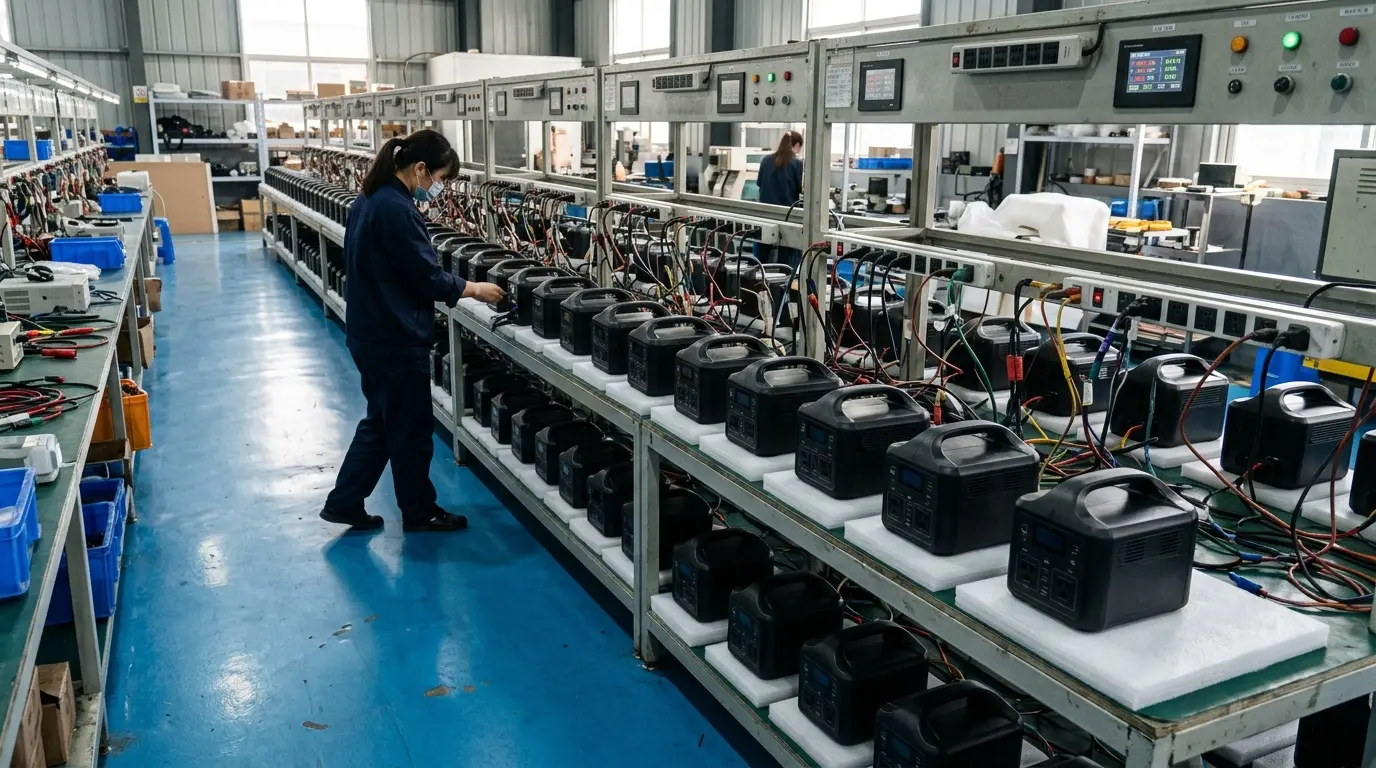
Phase 4: Mass Production & Quality Control
With the prototype approved, production moves into full-scale manufacturing. This is where CHUANHE ESS’s scale and quality systems ensure consistent, reliable delivery.
What Happens During This Phase
Production Planning and Material Procurement
Component sourcing and procurement are initiated for all materials—battery cells, PCBs, enclosures, packaging, and accessories. We use premium Grade A LiFePO4 battery cells to ensure exceptional safety, stability, and long-term performance.
Manufacturing and Assembly
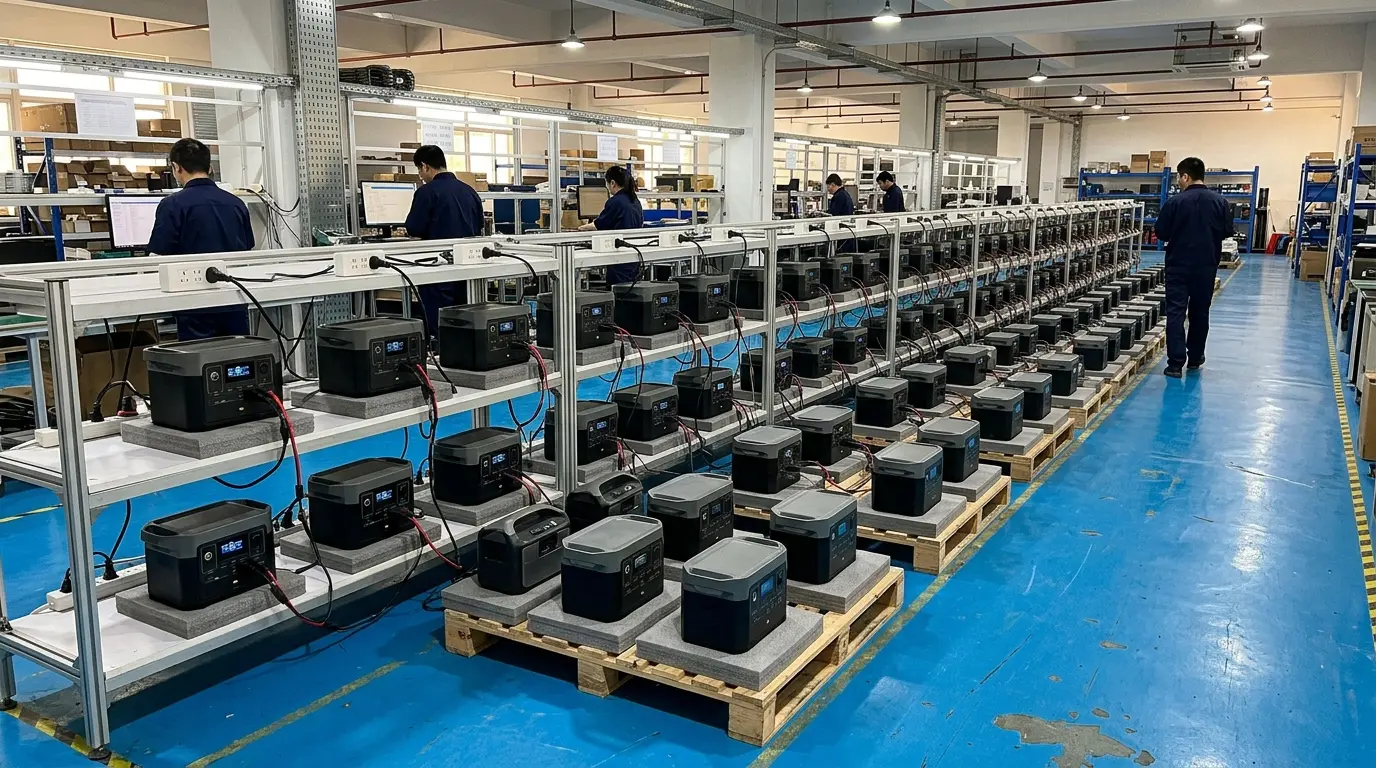
Our 50,000㎡ modern manufacturing facility is equipped with 20 production lines, 5 PACK lines, and 3 SMT lines, with annual production capacity reaching multi-gigawatt-hour levels. The manufacturing process includes:
- PCB fabrication and assembly — Surface-mount technology (SMT) assembly of circuit boards
- Battery pack assembly — Precision assembly of LiFePO4 battery cells into protected packs
- Box/build assembly — Integration of all components into the final enclosure
- Function testing — Full functionality verification of every unit
- Aging testing — Extended run-in testing to identify any early failures
Quality Control at Every Stage
Quality is not inspected at the end—it is built in at every step:
- Incoming material inspection — All components are verified against specifications
- In-process quality control — Voltage testing, insulation checks, and output calibration at each production stage
- Final quality assurance — Comprehensive testing of every finished unit before packaging
Packaging and Logistics
Products are packaged according to your brand specifications, with custom packaging design available. CHUANHE ESS coordinates logistics, customs clearance, and international shipping to your destination.
Your Role and Decision Points
You receive production samples from the first manufacturing run for final approval before full-scale production begins. Throughout production, you receive regular updates on progress and delivery timelines.
CHUANHE ESS maintains a 99%+ on-time delivery rate—because in B2B procurement, reliability is just as important as quality.
Estimated duration: 25–40 days for standard orders, depending on order volume and customization level.
Your Control Points Throughout the Journey
One of the biggest concerns brands have about ODM manufacturing is losing control over the product. Here is the reality: you are in the driver’s seat at every critical decision point.
| Phase | Your Decision Points |
|---|---|
| Needs Analysis | Target market, power/capacity, design, features, certifications, budget |
| 3D Rendering & Design | Approve 3D renders, confirm technical specifications, sign off on circuit design |
| Prototyping & Testing | Test the prototype yourself, provide feedback, approve before mass production |
| Mass Production | Approve first-article samples, monitor production updates, accept final delivery |
At CHUANHE ESS, we do not just take orders—we build partnerships. Our vertically integrated engineering platform and transparent project management ensure you are never in the dark.
Why Choose CHUANHE ESS for Your ODM Project?
From battery chemistry and capacity to industrial design, firmware, packaging, and App interfaces—every detail can be tailored to your brand. Our product portfolio covers 200W to 5000W, with form factors including hand-carry, suitcase, desktop, outdoor box, military case, tool box, RV power station, portable UPS, and stackable designs.
Products are designed for international markets, meeting UL, CE, RoHS, UN38.3, PSE, FCC, and other major certification requirements. We help simplify your market entry and compliance.
Serving customers in more than 50 countries across Europe, North America, Australia, Asia, Africa, and Latin America. From startup brands to established energy companies, we provide comprehensive solutions covering product development, manufacturing, certification support, logistics, and after-sales service.
50,000㎡ manufacturing facility with multi-GWh annual capacity and 99%+ on-time delivery. You can scale from pilot runs to large-volume orders without changing partners.
Independent BMS, PCS and EMS development – the heart of every portable power station. Self-developed core technologies mean better quality, faster iterations, and full supply chain control.
Ready to Build Your Portable Power Station Brand?
The ODM customization process is not a mystery—it is a collaborative journey from concept to market. With the right manufacturing partner, you can bring a high-quality, differentiated product to market faster, with less risk, and with complete confidence.
The global portable power station market is growing rapidly—and the window of opportunity will not stay open forever.
📦 Looking for a transparent, reliable ODM partner?
Contact CHUANHE ESS today – let’s turn your product vision into reality.
This guide is designed for global brands, distributors, and procurement professionals evaluating ODM partnerships for portable power stations. For project-specific timelines and custom solutions, please contact our team directly.